
- Utilitarianism, Liberty, Representative government and representation, Jurisprudence
"Because Utilitarianism is a work of enduring value, it is easy to forget that Mill meant for it to be a topical and relevant contribution to the moral debates of his time. In this edition of Mill's essay, Colin Heydt situates the work in its historical context by supplementing the text of the essay with appendices containing excerpts of related works by Mill's predecessors, Mill himself, and prominent critics of his views. The historical richness of this edition of Utilitarianism would surely have pleased Mill, and will surely benefit today's readers." Ben Eggleston, University of Kansas -- "Colin Heydt has made judicious choices about which additional readings to place alongside Utilitarianism itself. In addition, his clearly written introduction paints a very plausible and attractive portrait of Mill as a committed moral reformer, albeit one who recognized that the improvement of the received morality must proceed incrementally. This volume is well suited both for introducing Mill to students and as a resource for scholars who would like to have the most pertinent texts in easy reach." Dale E. Miller, Old Dominion University -- John Stuart Mill's Utilitarianism is a philosophical defence of utilitarianism, a moral theory stating that right actions are those that tend to promote overall happiness. The essay first appeared as a series of articles published in Fraser's Magazine in 1861; the articles were collected and reprinted as a single book in 1863. Mill discusses utilitarianism in some of his other works, including On Liberty and The Subjection of Women, but Utilitarianism contains his only sustained defence of the theory. -- In this Broadview Edition, Colin Heydt provides a substantial introduction that will enable readers to understand better the polemical context for Utilitarianism. Heydt shows, for example, how Mill's moral philosophy grew out of political engagement, rather than exclusively out of a speculative interest in determining the nature of morality. Appendices include precedents to Mill's work, reactions to Utilitarianism, and related writings by Mill. --Book Jacket.
Log it
Sign in to log this.
Character
Cool, earnest, grave and spare.
- cooloverwhelming
- earnestironic
- gravecomic
- sparerichly built
- contemplativerelentless
Who loves it, who doesn't
No profiled raters yet.
Ask the title
A yes-or-no question, answered from what people wrote here, on TMDB and on Wikipedia. Never made up.
Reviews
No reviews yet.
About the book
- Author
- John Stuart Mill
- First published
- 1891
- Pages
- 112
- Publisher
- Hackett Pub, Kessinger Publishing, Classic Books
- Editions
- 95
- Language
- German, Swedish, French, Spanish
- ISBN
- 9781775410614
Where to read
Libraries first: a card gets you most books for nothing. Each opens that service’s page for this title.
On Open Library, 11 have read it and 91 want to.
“THERE ARE few circumstances among those which make up the present condition of human knowledge, more unlike what might have been expected, or more significant of the backward state in which speculation on the most important subjects still lingers, than the little progress which has been made in the decision of the controversy respecting the criterion of right and wrong.”
John Stuart Mill (20 May 1806 – 8 May 1873), usually cited as J. S. Mill, was a British philosopher, political economist, and civil servant. One of the most influential thinkers in the history of liberalism, he contributed widely to social theory, political theory, and political economy. Dubbed "the most influential English-speaking philosopher of the nineteenth century", Mill's conception of liberty justified the freedom of the individual in opposition to unlimited state and social control. **Source**: [John Stuart Mill](https://en.wikipedia.org/wiki/John_Stuart_Mill) on Wikipedia.
Similar in taste
Closest on the same fourteen dimensions, from everything scored on Tastebuds Other media included when they land close.
 The Problems of Philosophy 190084% alikeBoth cool, earnest, spare.
 Miracles 194783% alikeBoth cool, earnest, spare.
 The Abolition of Man 194381% alikeBoth earnest, spare, contemplative.
 On Becoming a Person 196179% alikeBoth earnest, grave, spare.
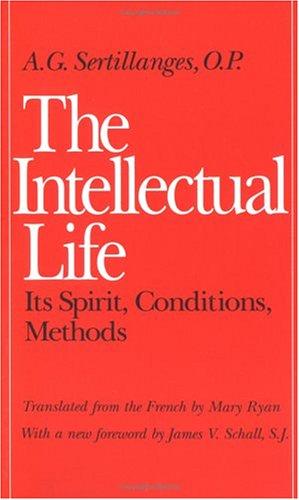 The intellectual life 194676% alikeBoth earnest, spare, grave.
 Both cool, earnest, grave.
 The practicing stoic 201875% alikeBoth cool, earnest, contemplative.
 Orthodoxy 187474% alikeBoth spare, character-led, cool.
 De Palma 201670% alikeFilm · Both earnest, classical in form, spare.
 The Irishman: In Conversation 201964% alikeFilm · Both spare, classical in form, earnest.