
A System of Logic, Ratiocinative and Inductive 1843
By John Stuart Mill, Jean Louis Hippolyte Peisse, John Mill, Jean Louis Hippolyte Peisse
- Science, Methodology, Logic, Theory of Knowledge
Log it
Sign in to log this.
Character
Cool, earnest, spare and classical in form.
- cooloverwhelming
- earnestironic
- sparerichly built
- classical in formformally daring
- gravecomic
Who loves it, who doesn't
No profiled raters yet.
Ask the title
A yes-or-no question, answered from what people wrote here, on TMDB and on Wikipedia. Never made up.
Reviews
No reviews yet.
About the book
- First published
- 1850
- Pages
- 622
- Publisher
- University of Toronto Press, Routledge & Sons, Longman
- Editions
- 114
- Language
- Russian, English, German, French
- ISBN
- 9780710075031
Where to read
Libraries first: a card gets you most books for nothing. Each opens that service’s page for this title.
On Open Library, 2 have read it and 70 want to.
“1. IT is so much the established practice of writers on logic to commence their treatises by a few general observations (in most cases, it is true, rather meagre) on Terms and their varieties, that it will, perhaps, scarcely be required from me in merely following the common usage, to be as particular in assigning my reasons, as it is usually expected that those should be who deviate from it.”
John Stuart Mill (20 May 1806 – 8 May 1873), usually cited as J. S. Mill, was a British philosopher, political economist, and civil servant. One of the most influential thinkers in the history of liberalism, he contributed widely to social theory, political theory, and political economy. Dubbed "the most influential English-speaking philosopher of the nineteenth century", Mill's conception of liberty justified the freedom of the individual in opposition to unlimited state and social control. **Source**: [John Stuart Mill](https://en.wikipedia.org/wiki/John_Stuart_Mill) on Wikipedia.
Similar in taste
Closest on the same fourteen dimensions, from everything scored on Tastebuds Other media included when they land close.
 The theory of money and credit 193486% alikeBoth cool, earnest, grave.
 Both cool, earnest, spare.
 Die Gabe 195082% alikeBoth cool, earnest, grave.
 Both cool, classical in form, spare.
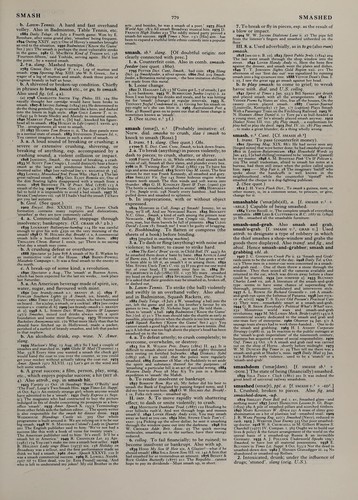 The Oxford English dictionary 198982% alikeBoth cool, earnest, classical in form.
 Both cool, earnest, classical in form.
 Aspects of the Theory of Syntax 196581% alikeBoth cool, grave, earnest.
 Both earnest, cool, grave.
 Side by Side 201262% alikeFilm · Both grave, earnest, cool; this one is more effortless.
 American Masters 198660% alikeTelevision · Both earnest, classical in form, grave.