
- Revolutions, Economic development, Economics, Social policy
Why are some nations rich and others poor, divided by wealth and poverty, health and sickness, food and famine? Is it culture, the weather, or geography that determines prosperity or poverty? As *Why Nations Fail* shows, none of these factors is either definitive or destiny. Drawing on fifteen years of original research, Daron Acemoglu and James Robinson conclusively show that it is our man-made political and economic institutions that underlie economic success (or the lack of it). Korea, to take just one example, is a remarkably homogeneous nation, yet the people of North Korea are among the poorest on earth while their brothers and sisters in South Korea are among the richest. The differences between the Koreas is due to the politics that created those two different institutional trajectories. Acemoglu and Robinson marshal extraordinary historical evidence from the Roman Empire, the Mayan city-states, the Soviet Union, the United States, and Africa to build a new theory of political economy with great relevance for the big questions of today, among them: Will China's economy continue to grow at such a high speed and ultimately overwhelm the West? Are America's best days behind it? Are we creating a vicious cycle that enriches and empowers a small minority?
Log it
Sign in to log this.
Character
Earnest, cool, classical in form and grave.
- earnestironic
- cooloverwhelming
- classical in formformally daring
- gravecomic
- intimateepic
Who loves it, who doesn't
No profiled raters yet.
Ask the title
A yes-or-no question, answered from what people wrote here, on TMDB and on Wikipedia. Never made up.
Reviews
No reviews yet.
About the book
- Author
- Daron Acemoglu, James A. Robinson
- First published
- 2012
- Pages
- 529
- Publisher
- Crown Publishers, FISCHER Taschenbuch, Crítica
- Editions
- 15
- Language
- English, German, ukr, Spanish
- ISBN
- 9789584232830
Where to read
Libraries first: a card gets you most books for nothing. Each opens that service’s page for this title.
On Open Library, 45 have read it and 618 want to.
“Este libro trata de las enormes diferencias en ingresos y nivel de vida que separan a los países ricos del mundo, como Estados Unidos, Gran Bretaña y Alemania, de los pobres, como los del África subsahariana, América Central y el sur de Asia.”
Kamer Daron Acemoğlu (born September 3, 1967) is a Turkish-born American economist who has taught at the Massachusetts Institute of Technology (MIT) since 1993. He is currently the Elizabeth and James Killian Professor of Economics at MIT. He was named Institute Professor in 2019. **Source**: [Daron Acemoglu](https://en.wikipedia.org/wiki/Daron_Acemoglu) on Wikipedia.
Similar in taste
Closest on the same fourteen dimensions, from everything scored on Tastebuds Other media included when they land close.
 Abundance 202582% alikeBoth earnest, classical in form, cool.
 Chip War 202280% alikeBoth earnest, classical in form, cool.
 Prisoners of geography 201580% alikeBoth earnest, cool, grave.
 The Narrow Corridor 201978% alikeBoth earnest, cool, classical in form.
 Guns, Germs, and Steel 199774% alikeBoth epic, cool, earnest.
 Lies My Teacher Told Me 199474% alikeBoth earnest, classical in form, grave.
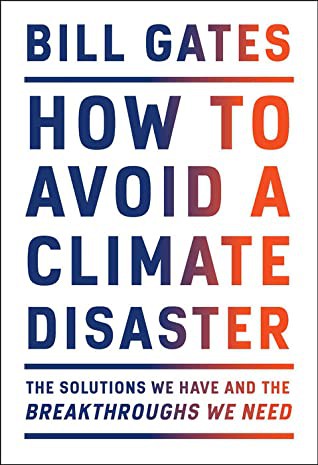 How to Avoid a Climate Disaster 201973% alikeBoth earnest, classical in form, grave.
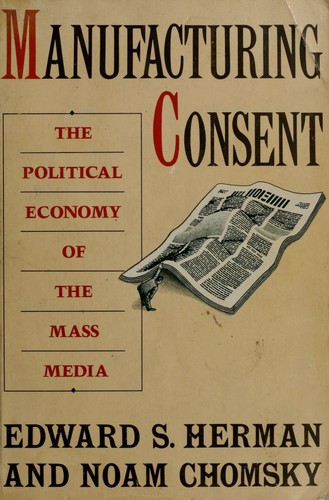 Manufacturing consent 198872% alikeBoth earnest, cool, classical in form.
 Film · Both earnest, grave, classical in form.
 The New York Times Presents 202073% alikeTelevision · Both earnest, grave, classical in form.