
- Government policy, Discrimination in housing, POLITICAL SCIENCE / Public Policy / City Planning & Urban Development, Segregation
Widely heralded as a "masterful" (Washington Post) and "essential" (Slate) history of the modern American metropolis, Richard Rothstein's The Color of Law offers "the most forceful argument ever published on how federal, state, and local governments gave rise to and reinforced neighborhood segregation" (William Julius Wilson). Exploding the myth of de facto segregation arising from private prejudice or the unintended consequences of economic forces, Rothstein describes how the American government systematically imposed residential segregation: with undisguised racial zoning; public housing that purposefully segregated previously mixed communities; subsidies for builders to create whites-only suburbs; tax exemptions for institutions that enforced segregation; and support for violent resistance to African Americans in white neighborhoods. A groundbreaking, "virtually indispensable" study that has already transformed our understanding of twentieth-century urban history (Chicago Daily Observer), The Color of Law forces us to face the obligation to remedy our unconstitutional past.
Log it
Sign in to log this.
Character
Earnest, grave, classical in form and plot-driven.
- earnestironic
- gravecomic
- classical in formformally daring
- character-ledplot-driven
- resolvedopen-ended
Who loves it, who doesn't
No profiled raters yet.
Ask the title
A yes-or-no question, answered from what people wrote here, on TMDB and on Wikipedia. Never made up.
Reviews
No reviews yet.
About the book
- Author
- Richard Rothstein
- First published
- 2017
- Pages
- 345
- Publisher
- Liverlight, Turtleback, Recorded Books, Inc. and Blackstone Publishing
- Editions
- 7
- Language
- English
- ISBN
- 9781631492860
Where to read
Libraries first: a card gets you most books for nothing. Each opens that service’s page for this title.
On Open Library, 16 have read it and 142 want to.
- Government policy
- Discrimination in housing
- POLITICAL SCIENCE / Public Policy / City Planning & Urban Development
- Segregation
- LAW / Housing & Urban Development
- Discrimination & Race Relations
- African Americans
- HISTORY / United States / 20th Century
- African americans, segregation
- African americans, history
- United states, race relations
- New York Times bestseller
“WHEN, FROM 2014 TO 2016, riots in places like Ferguson, Baltimore, Milwaukee, or Charlotte captured our attention, most of us thought we knew how these segregated neighborhoods, with their crime, violence, anger, and poverty came to be.”
American Historian and education columnist.
Similar in taste
Closest on the same fourteen dimensions, from everything scored on Tastebuds Other media included when they land close.
 The Emperor of All Maladies 201077% alikeBoth earnest, grave, classical in form.
 Both grave, earnest, classical in form.
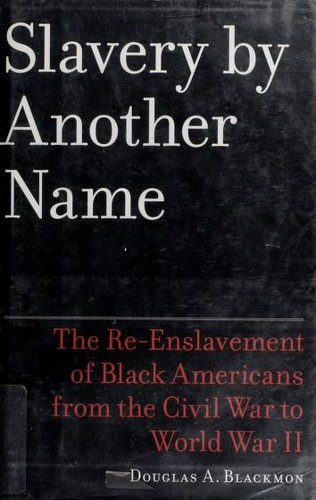 Slavery by another name 200875% alikeBoth earnest, grave, classical in form.
 Both grave, earnest, plot-driven.
 Silent Spring 196274% alikeBoth earnest, grave, classical in form.
 The Jakarta Method 202073% alikeBoth earnest, grave, classical in form.
 Bury My Heart at Wounded Knee 167272% alikeBoth grave, earnest, plot-driven.
 In the Heart of the Sea 200071% alikeBoth earnest, grave, classical in form.
 One Day in September 199977% alikeFilm · Both grave, earnest, classical in form.
 The Civil War 199076% alikeTelevision · Both earnest, grave, classical in form.