- psychology, Alzheimer’s disese, amnesia, Parkinson’s disease
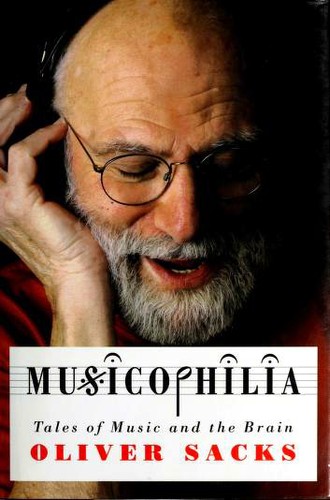
Music can move us to the heights or depths of emotion. It can persuade us to buy something, or remind us of our first date. It can lift us out of depression when nothing else can. It can get us dancing to its beat. But the power of music goes much, much further. Indeed, music occupies more areas of our brain than language does–humans are a musical species. Oliver Sacks’s compassionate, compelling tales of people struggling to adapt to different neurological conditions have fundamentally changed the way we think of our own brains, and of the human experience. In Musicophilia, he examines the powers of music through the individual experiences of patients, musicians, and everyday people–from a man who is struck by lightning and suddenly inspired to become a pianist at the age of forty-two, to an entire group of children with Williams syndrome who are hypermusical from birth; from people with “amusia,” to whom a symphony sounds like the clattering of pots and pans, to a man whose memory spans only seven seconds–for everything but music. Our exquisite sensitivity to music can sometimes go wrong: Sacks explores how catchy tunes can subject us to hours of mental replay, and how a surprising number of people acquire nonstop musical hallucinations that assault them night and day. Yet far more frequently, music goes right: Sacks describes how music can animate people with Parkinson’s disease who cannot otherwise move, give words to stroke patients who cannot otherwise speak, and calm and organize people whose memories are ravaged by Alzheimer’s or amnesia. Music is irresistible, haunting, and unforgettable, and in Musicophilia, Oliver Sacks tells us why. ([source][1]) [1]: https://www.oliversacks.com/books-by-oliver-sacks/musicophilia/
Log it
Sign in to log this.
Character
Spare, contemporary, earnest and classical in form.
- sparerichly built
- contemporarynostalgic
- earnestironic
- classical in formformally daring
- gravecomic
Who loves it, who doesn't
No profiled raters yet.
Ask the title
A yes-or-no question, answered from what people wrote here, on TMDB and on Wikipedia. Never made up.
Reviews
No reviews yet.
About the book
- Author
- Oliver Sacks
- First published
- October 16, 2007
- Pages
- 425
- Publisher
- Seuil, Adelphi Edizioni, Editions du Seuil
- Editions
- 43
- Language
- English, German, Japanese, heb
- ISBN
- 9788845972614
Where to read
Libraries first: a card gets you most books for nothing. Each opens that service’s page for this title.
On Open Library, 29 have read it and 236 want to.
Oliver Sacks (1933–2015) was a British neurologist, writer, and science communicator, known for making neurology accessible to the general public through his works. He spent much of his career in the United States, where he worked as a physician and university professor. His writings focused on real neurological cases and on the relationship between the brain, the mind, and human experience. His work was distinguished by combining scientific research with a close and humanistic perspective toward his patients. --- Oliver Sacks (1933-2015) fue un neurólogo, escritor y divulgador científico británico, conocido por acercar la neurología al público mediante sus obras. Desarrolló gran parte de su
Similar in taste
Closest on the same fourteen dimensions, from everything scored on Tastebuds Other media included when they land close.
 Both spare, earnest, contemporary.
 When the Body Says No 200379% alikeBoth contemporary, spare, earnest.
 Being Mortal 201479% alikeBoth contemporary, spare, earnest.
 How to Be an Antiracist 201977% alikeBoth earnest, contemporary, spare.
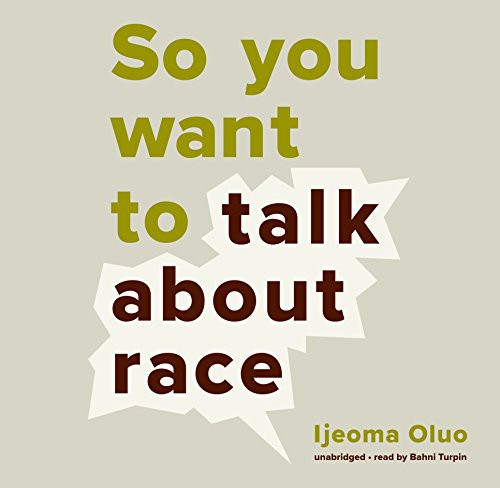 So you want to talk about race 201876% alikeBoth contemporary, spare, classical in form.
 Between Two Kingdoms 202074% alikeBoth contemporary, earnest, spare.
 Out of my mind 201074% alikeBoth contemporary, earnest, spare.
 The Art of Fielding 201174% alikeBoth contemporary, classical in form, earnest.
 Parenthood 201078% alikeTelevision · Both contemporary, spare, earnest.
 Film · Both contemporary, earnest, classical in form.