
- Origin, Nature, Indians, Antiquities
A groundbreaking study that radically alters our understanding of the Americas before the arrival of the Europeans in 1492. Traditionally, Americans learned in school that the ancestors of the people who inhabited the Western Hemisphere at the time of Columbus's landing had crossed the Bering Strait twelve thousand years ago; existed mainly in small, nomadic bands; and lived so lightly on the land that the Americas was, for all practical purposes, still a vast wilderness. But as Charles C. Mann now makes clear, archaeologists and anthropologists have spent the last thirty years proving these and many other long-held assumptions wrong. In a book that startles and persuades, Mann reveals how a new generation of researchers equipped with novel scientific techniques came to previously unheard-of conclusions. Among them: * In 1491 there were probably more people living in the Americas than in Europe. * Certain cities--such as Tenochtitlan, the Aztec capital--were far greater in population than any contemporary European city. Furthermore, Tenochtitlan, unlike any capital in Europe at that time, had running water, beautiful botanical gardens, and immaculately clean streets. * The earliest cities in the Western Hemisphere were thriving before the Egyptians built the great pyramids.- Pre-Columbian Indians in Mexico developed corn by a breeding process so sophisticated that the journal Science recently described it as "man's first, and perhaps the greatest, feat of genetic engineering." * Amazonian Indians learned how to farm the rain forest without destroying it--a process scientists are studying today in the hope of regaining this lost knowledge. * Native Americans transformed their land so completely that Europeans arrived in a hemisphere already massively "landscaped" by human beings. Mann sheds clarifying light on the methods used to arrive at these new visions of the pre-Columbian Americas and how they have affected our understanding of our history and our thinking about the environment. His book is an exciting and learned account of scientific inquiry and revelation.From the Hardcover edition.
Log it
Sign in to log this.
Character
Earnest, classical in form, cool and epic.
- earnestironic
- classical in formformally daring
- cooloverwhelming
- intimateepic
- character-ledplot-driven
Who loves it, who doesn't
No profiled raters yet.
Ask the title
A yes-or-no question, answered from what people wrote here, on TMDB and on Wikipedia. Never made up.
Reviews
No reviews yet.
About the book
- Author
- Charles C. Mann
- First published
- 2005
- Pages
- 632
- Publisher
- Yuan zu wen hua shi ye gu gen you xian gong si fa xing, Highbridge Co, Taurus
- Editions
- 17
- Language
- French, English, Spanish, Chinese
- ISBN
- 9780307278180
Where to read
Libraries first: a card gets you most books for nothing. Each opens that service’s page for this title.
On Open Library, 48 have read it and 174 want to.
Similar in taste
Closest on the same fourteen dimensions, from everything scored on Tastebuds Other media included when they land close.
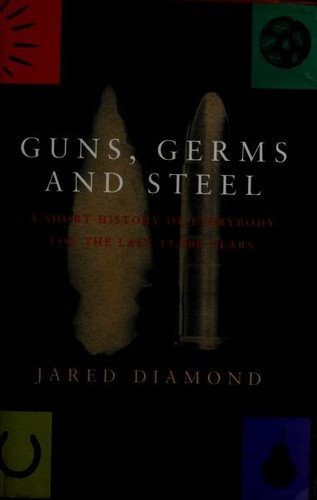 Guns, Germs, and Steel 199774% alikeBoth epic, earnest, cool.
 Cosmos 198073% alikeBoth earnest, epic, grave.
 Both earnest, classical in form, epic.
 SPQR 201571% alikeBoth classical in form, epic, earnest.
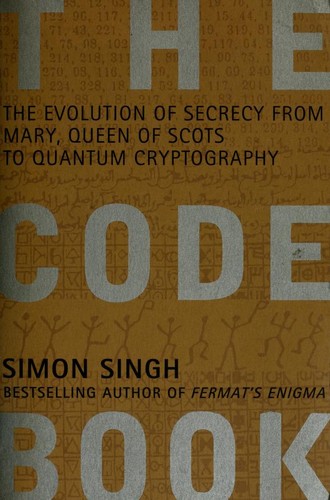 The Code Book 199970% alikeBoth earnest, classical in form, epic.
 Salt 200269% alikeBoth cool, classical in form, earnest.
 Both earnest, classical in form, cool.
 Both earnest, epic, classical in form.
 Prehistoric Planet 202272% alikeTelevision · Both earnest, epic, classical in form.
 Cosmos: A Personal Voyage 198070% alikeTelevision · Both earnest, epic, plot-driven.