
- Social conditions, Social change, History, Isolation <Soziologie>
"Updated to include a new chapter about the influence of social media and the Internet—the 20th anniversary edition of Bowling Alone remains a seminal work of social analysis, and its examination of what happened to our sense of community remains more relevant than ever in today’s fractured America. Twenty years, ago, Robert Putnam made a seemingly simple observation: once we bowled in leagues, usually after work; but no longer. This seemingly small phenomenon symbolized a significant social change that became the basis of the acclaimed bestseller, Bowling Alone, which The Washington Post called “a very important book” and Putnam, “the de Tocqueville of our generation.” Bowling Alone surveyed in detail Americans’ changing behavior over the decades, showing how we had become increasingly disconnected from family, friends, neighbors, and social structures, whether it’s with the PTA, church, clubs, political parties, or bowling leagues. In the revised edition of his classic work, Putnam shows how our shrinking access to the “social capital” that is the reward of communal activity and community sharing still poses a serious threat to our civic and personal health, and how these consequences have a new resonance for our divided country today. He includes critical new material on the pervasive influence of social media and the internet, which has introduced previously unthinkable opportunities for social connection—as well as unprecedented levels of alienation and isolation. At the time of its publication, Putnam’s then-groundbreaking work showed how social bonds are the most powerful predictor of life satisfaction, and how the loss of social capital is felt in critical ways, acting as a strong predictor of crime rates and other measures of neighborhood quality of life, and affecting our health in other ways. While the ways in which we connect, or become disconnected, have changed over the decades, his central argument remains as powerful and urgent as ever: mending our frayed social capital is key to preserving the very fabric of our society"--Simon & Schuster.
Log it
Sign in to log this.
Character
Earnest, classical in form, grave and cool.
- earnestironic
- classical in formformally daring
- gravecomic
- cooloverwhelming
- contemplativerelentless
Who loves it, who doesn't
No profiled raters yet.
Ask the title
A yes-or-no question, answered from what people wrote here, on TMDB and on Wikipedia. Never made up.
Reviews
No reviews yet.
About the book
- Author
- Robert D. Putnam
- First published
- 2000
- Pages
- 544
- Publisher
- Simon & Schuster Audio, Simon & Schuster, Incorporated, Simon & Schuster
- Editions
- 6
- Language
- English
- ISBN
- 9780743203043
Where to read
Libraries first: a card gets you most books for nothing. Each opens that service’s page for this title.
On Open Library, 5 have read it and 135 want to.
“NO ONE IS LEFT from the Glenn Valley, Pennsylvania, Bridge Club who can tell us precisely when or why the group broke up, even though its forty-odd members were still playing regularly as recently as 1990, just as they had done for more than half a century.”
Similar in taste
Closest on the same fourteen dimensions, from everything scored on Tastebuds Other media included when they land close.
 The Road to Serfdom 194480% alikeBoth earnest, classical in form, grave.
 Jesus and John Wayne 202080% alikeBoth classical in form, earnest, grave.
 Amusing Ourselves to Death 198578% alikeBoth classical in form, earnest, cool.
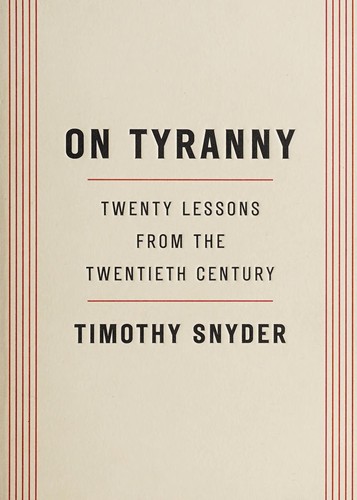 On Tyranny 201777% alikeBoth earnest, grave, classical in form.
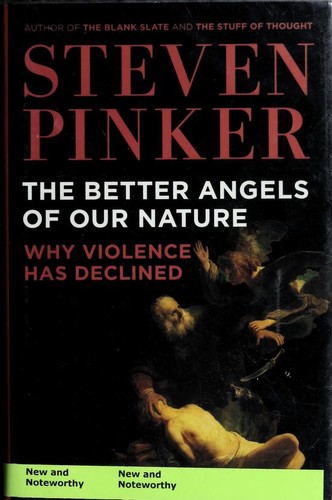 The better angels of our nature 201176% alikeBoth earnest, classical in form, cool.
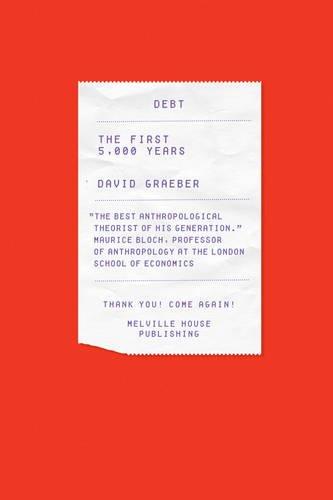 Debt 201174% alikeBoth earnest, classical in form, grave.
 Men, women, and chain saws 199274% alikeBoth classical in form, grave, earnest.
 Filterworld 202474% alikeBoth classical in form, earnest, grave.
 Cover-Up 202573% alikeFilm · Both earnest, grave, classical in form.
 J. Edgar 201169% alikeFilm · Both grave, earnest, classical in form.