
- New York Times bestseller, military education, end of the world, prize:nebula
Ender's Game is a 1985 military science fiction novel by American author Orson Scott Card. Set at an unspecified date in Earth's future, the novel presents an imperiled humankind after two conflicts with the Formics, an insectoid alien species they dub the "buggers". In preparation for an anticipated third invasion, children, including the novel's protagonist, Andrew "Ender" Wiggin, are trained from a very young age by putting them through increasingly difficult games, including some in zero gravity, where Ender's tactical genius is revealed. The book originated as a short story of the same name, published in the August 1977 issue of Analog Science Fiction and Fact. The novel was published on January 15, 1985. Later, by elaborating on characters and plotlines depicted in the novel, Card was able to write additional books in the Ender's Game series. Card also released an updated version of Ender's Game in 1991, changing some political facts to reflect the times more accurately (e.g., to include the recent collapse of the Soviet Union and the end of the Cold War). The novel has been translated into 34 languages. Reception of the book has been mostly positive. It has become suggested reading for many military organizations, including the United States Marine Corps. Ender's Game was recognized as "best novel" by the 1985 Nebula Award\[3\] and the 1986 Hugo Award\[4\] in the genres of science fiction and fantasy. Its four sequels—Speaker for the Dead (1986), Xenocide (1991), Children of the Mind (1996), and Ender in Exile (2008)—follow Ender's subsequent travels to many different worlds in the galaxy. In addition, the later novella A War of Gifts (2007) and novel Ender's Shadow (1999), plus other novels in the Shadow saga, take place during the same time period as the original. --- Contained in: [Ender's War](https://openlibrary.org/works/OL49619W) See also: - [Ender's Game: 1/2](https://openlibrary.org/works/OL19647657W/Ender's_Game._1_2)
- Harm to children
Log it
Sign in to log this.
Character
Classical in form, epic, earnest and grave.
- classical in formformally daring
- intimateepic
- earnestironic
- gravecomic
- contemporarynostalgic
Who loves it, who doesn't
No profiled raters yet.
Ask the title
A yes-or-no question, answered from what people wrote here, on TMDB and on Wikipedia. Never made up.
Reviews
No reviews yet.
About the book
- Author
- Orson Scott Card
- First published
- 1985
- Pages
- 330
- Publisher
- EDB FICCION, Brand: Audio Literature, Little, Brown & Company (Canada)
- Editions
- 105
- Language
- German, srp, Italian, Spanish
- ISBN
- 9780613824224
Where to read
Libraries first: a card gets you most books for nothing. Each opens that service’s page for this title.
On Open Library, 604 have read it and 1,125 want to.
“I've watched through his eyes, I've listened through his ears, and I tell you he's the one.”
Orson Scott Card is an American novelist, critic, public speaker, essayist and columnist. He writes in several genres but is known best for science fiction. His novel Ender's Game (1985) and its sequel Speaker for the Dead (1986) both won Hugo and Nebula Awards, making Card the only author to win both science fiction's top U.S. prizes in consecutive years.
Similar in taste
Closest on the same fourteen dimensions, from everything scored on Tastebuds Other media included when they land close.
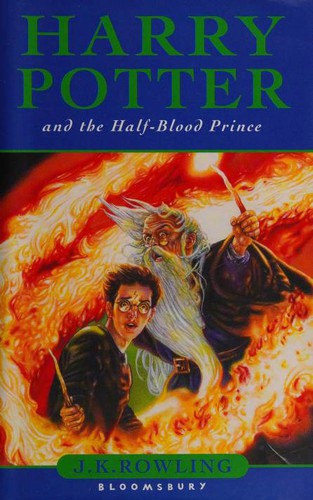 Both classical in form, earnest, contemporary.
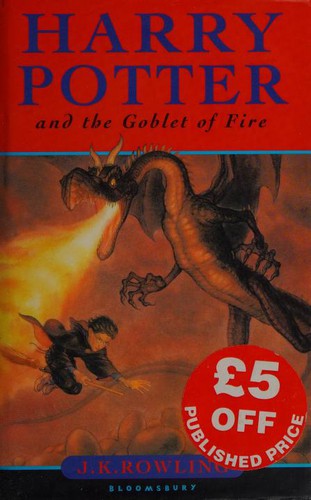 Both classical in form, earnest, contemporary.
 Both classical in form, earnest, contemporary.
 Project Hail Mary 202172% alikeBoth epic, contemporary, classical in form.
 The Hunger Games 200872% alikeBoth classical in form, grave, contemporary.
 Catching Fire 200972% alikeBoth classical in form, contemporary, grave.
 Both classical in form, epic, earnest.
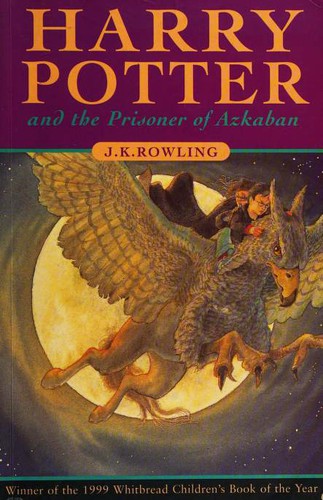 Both classical in form, earnest, contemporary; this one is more intimate.
 Warriors of the Wind 198480% alikeFilm · Both epic, earnest, classical in form.
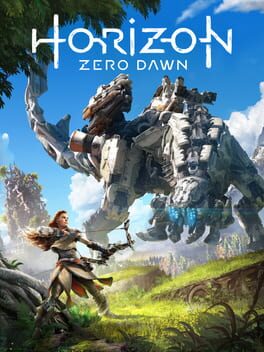 Horizon Zero Dawn 201780% alikeGame · Both epic, classical in form, earnest.