
- Nonfiction, Psychology, Zelfbeheersing, Psychologische aspecten
What makes good people do bad things? How can moral people be seduced to act immorally? Where is the line separating good from evil, and who is in danger of crossing it?Renowned social psychologist Philip Zimbardo has the answers, and in The Lucifer Effect he explains how--and the myriad reasons why--we are all susceptible to the lure of "the dark side." Drawing on examples from history as well as his own trailblazing research, Zimbardo details how situational forces and group dynamics can work in concert to make monsters out of decent men and women. Zimbardo is perhaps best known as the creator of the Stanford Prison Experiment. Here, for the first time and in detail, he tells the full story of this landmark study, in which a group of college-student volunteers was randomly divided into "guards" and "inmates" and then placed in a mock prison environment. Within a week the study was abandoned, as ordinary college students were transformed into either brutal, sadistic guards or emotionally broken prisoners. By illuminating the psychological causes behind such disturbing metamorphoses, Zimbardo enables us to better understand a variety of harrowing phenomena, from corporate malfeasance to organized genocide to how once upstanding American soldiers came to abuse and torture Iraqi detainees in Abu Ghraib. He replaces the long-held notion of the "bad apple" with that of the "bad barrel"--the idea that the social setting and the system contaminate the individual, rather than the other way around.This is a book that dares to hold a mirror up to mankind, showing us that we might not be who we think we are. While forcing us to reexamine what we are capable of doing when caught up in the crucible of behavioral dynamics, though, Zimbardo also offers hope. We are capable of resisting evil, he argues, and can even teach ourselves to act heroically. Like Hannah Arendt's Eichmann in Jerusalem and Steven Pinker's The Blank Slate, The Lucifer Effect is a shocking, engrossing study that will change the way we view human behavior.From the Hardcover edition.
Log it
Sign in to log this.
Character
Earnest, grave, classical in form and contemporary.
- earnestironic
- gravecomic
- classical in formformally daring
- contemporarynostalgic
- sparerichly built
Who loves it, who doesn't
No profiled raters yet.
Ask the title
A yes-or-no question, answered from what people wrote here, on TMDB and on Wikipedia. Never made up.
Reviews
No reviews yet.
About the book
- Author
- Philip G. Zimbardo
- First published
- 2007
- Pages
- 576
- Publisher
- Random House, Random House Publishing Group, Random House Trade Paperbacks
- Editions
- 3
- Language
- English
- ISBN
- 9780812974447
Where to read
Libraries first: a card gets you most books for nothing. Each opens that service’s page for this title.
On Open Library, 9 have read it and 169 want to.
Similar in taste
Closest on the same fourteen dimensions, from everything scored on Tastebuds Other media included when they land close.
 Empire of Pain 202178% alikeBoth earnest, grave, classical in form.
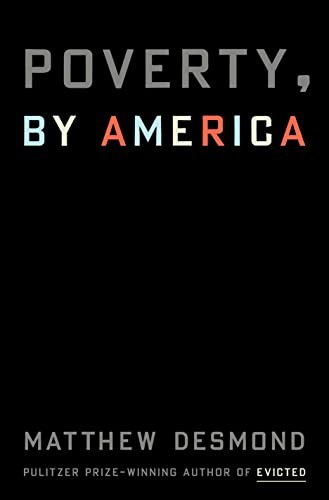 Poverty, by America 202378% alikeBoth earnest, grave, contemporary.
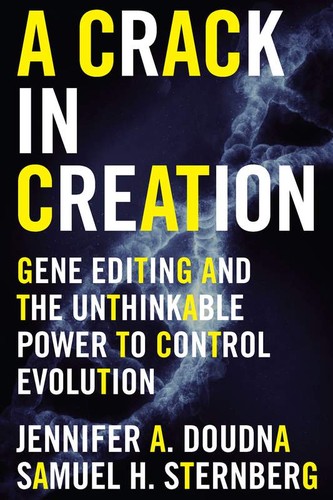 A Crack in Creation 201777% alikeBoth earnest, grave, contemporary.
 Automating Inequality 201877% alikeBoth earnest, grave, contemporary.
 Good and mad 201876% alikeBoth earnest, classical in form, grave.
 Both contemporary, earnest, grave.
 What Happened 201775% alikeBoth earnest, classical in form, contemporary.
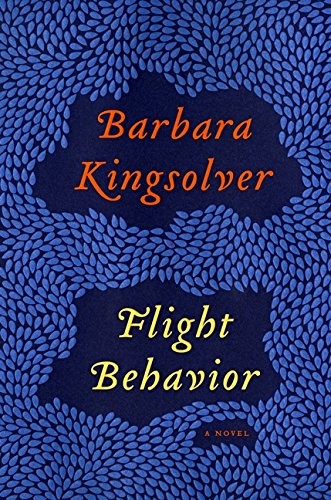 Flight behavior 201274% alikeBoth contemporary, earnest, classical in form.
 Why We Fight 200578% alikeFilm · Both grave, earnest, classical in form.
 The Great Hack 201975% alikeFilm · Both earnest, grave, contemporary.