
- Early works to 1800, Judgment (Logic), Teleology, Aesthetics
In THE CRITIQUE OF JUDGMENT (1790), Immanuel Kant (1724-1804) seeks to establish the a priori principles underlying the faculty of judgement, just as he did in his previous critiques of pure and practical reason.
Log it
Sign in to log this.
Character
Grave, earnest, spare and cool.
- gravecomic
- earnestironic
- sparerichly built
- cooloverwhelming
- contemplativerelentless
Who loves it, who doesn't
No profiled raters yet.
Ask the title
A yes-or-no question, answered from what people wrote here, on TMDB and on Wikipedia. Never made up.
Reviews
No reviews yet.
About the book
- Author
- Immanuel Kant
- First published
- 1793
- Pages
- 339
- Publisher
- Oxford University Press, USA, Hafner Pub. Co., Librairie philosophique J. Vrin
- Editions
- 57
- Language
- German, heb, Chinese, French
- ISBN
- 9780872200258
Where to read
Libraries first: a card gets you most books for nothing. Each opens that service’s page for this title.
On Open Library, 5 have read it and 49 want to.
“In order to distinguish whether anything is beautiful or not, we refer the representation, not by the understanding to the object for cognition, but by the imagination (perhaps in conjunction with the understanding) to the subject and its feeling of pleasure or pain.”
Immanuel Kant was an 18th-century German philosopher from the Prussian city of Königsberg. Kant was the last influential philosopher of modern Europe in the classic sequence of the theory of knowledge during the Enlightenment beginning with thinkers John Locke, George Berkeley, and David Hume. Kant created a new perspective in philosophy which had widespread influences on philosophy continuing through to the 21st century. He published important works on epistemology, as well as works relevant to religion, law, and history. One of his most prominent works is the *Critique of Pure Reason*, an investigation into the limitations and structure of reason itself. It encompasses an attack on traditi
Similar in taste
Closest on the same fourteen dimensions, from everything scored on Tastebuds Other media included when they land close.
 Prolegomena 188393% alikeBoth grave, cool, earnest.
 Nicomachean Ethics 155889% alikeBoth earnest, classical in form, grave.
 Kritik der praktischen Vernunft 178887% alikeBoth grave, earnest, spare.
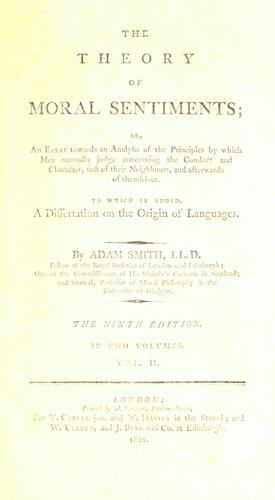 The theory of moral sentiments 175986% alikeBoth earnest, spare, contemplative.
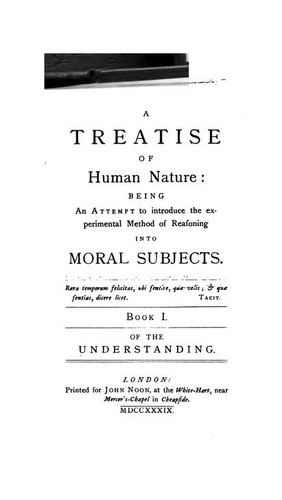 A treatise of human nature 173985% alikeBoth spare, cool, contemplative.
 Both grave, earnest, spare.
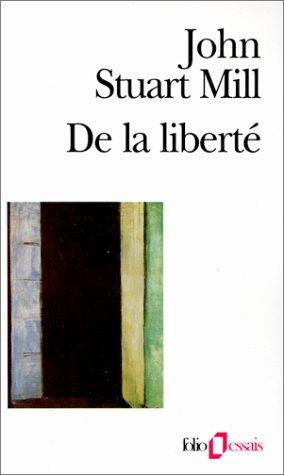 On Liberty 185979% alikeBoth earnest, spare, classical in form.
 De hominis dignitate 194279% alikeBoth grave, earnest, contemplative.
- Duke Ellington & John Coltrane 196361% alikeMusic · Both grave, spare, earnest.
- Solo Monk 196561% alikeMusic · Both spare, grave, earnest.