
- Political science, The State, Early works to 1800, Sciences politiques
Thomas Hobbes' Leviathan, from 1651, is one of the first and most influential arguments towards social contract. Written in the midst of the English Civil War, it concerns the structure of government and society and argues for strong central governance and the rule of an absolute sovereign as the way to avoid civil war and chaos.
Log it
Sign in to log this.
Character
Earnest, cool, grave and classical in form.
- earnestironic
- cooloverwhelming
- gravecomic
- classical in formformally daring
- contemplativerelentless
Who loves it, who doesn't
No profiled raters yet.
Ask the title
A yes-or-no question, answered from what people wrote here, on TMDB and on Wikipedia. Never made up.
Reviews
No reviews yet.
About the book
- Author
- Thomas Hobbes
- First published
- 1651
- Pages
- 508
- Publisher
- Bobbs-Merrill, Dover Publications, Rizzoli
- Editions
- 99
- Language
- German, heb, lat, Portuguese
- ISBN
- 9781551113319
Where to read
Libraries first: a card gets you most books for nothing. Each opens that service’s page for this title.
On Open Library, 29 have read it and 337 want to.
“Vuestro tan respetable hermano, el Sr. Sidney Godolphin, gustaba mientras vivió de tomar en consideración mis escritos, obligándome, además —como bien sabéis— con testimonios prácticos de su buena opinión, grandes en sí mismos pero mayores aún por la valía de su persona.”
Thomas Hobbes, in some older texts Thomas Hobbs of Malmsbury, was an English philosopher, remembered today for his work on political philosophy. His 1651 book Leviathan established the foundation for most of Western political philosophy from the perspective of social contract theory. Hobbes also contributed to a diverse array of fields, including history, geometry, physics of gases, theology, ethics, general philosophy, and political science. His account of human nature as self-interested cooperation has proved to be an enduring theory in the field of philosophical anthropology. He was one of the main philosophers who founded materialism.<sup>[1][1]</sup> [1]: http://en.wikipedia.org/wiki/Th
Similar in taste
Closest on the same fourteen dimensions, from everything scored on Tastebuds Other media included when they land close.
 The Road to Serfdom 194479% alikeBoth earnest, grave, classical in form.
 The Communist Manifesto 184877% alikeBoth earnest, grave, classical in form.
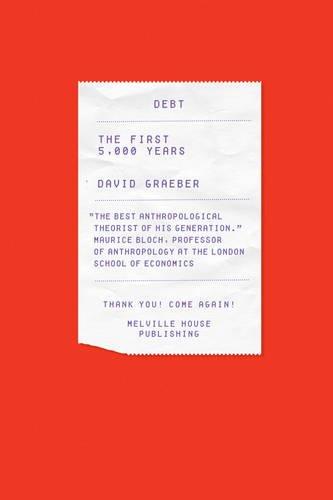 Debt 201175% alikeBoth earnest, cool, grave.
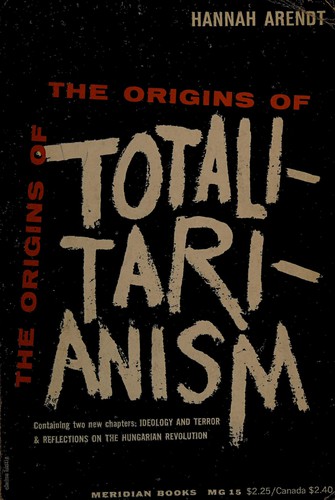 The Origins of Totalitarianism 195174% alikeBoth earnest, grave, cool.
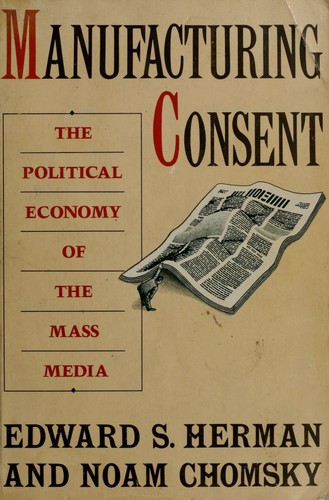 Manufacturing consent 198869% alikeBoth earnest, cool, grave; this one is more contemporary.
 Imperialism 192969% alikeBoth earnest, cool, grave; this one is more raw.
 Bowling Alone 200067% alikeBoth earnest, grave, classical in form.
 Both earnest, grave, cool.
 Che: Part Two 200861% alikeFilm · Both grave, earnest, cool.
 American Experience 198861% alikeTelevision · Both earnest, grave, classical in form.